Are you a homeowner wondering which works can reduce your taxes in 2026? Which tax schemes apply to your main residence this year? How should you declare the works and which tax benefits can be combined?
In this guide, discover the tax deductible works in 2026, available grants, and the applicable vat regime. We compare the different mechanisms credit, reduction, deduction and present the aids available to renovate, maintain, or extend your main residence.
You will also find a detailed numerical example, an operational checklist, and practical advice to secure your tax procedures. This guide explains where to declare your works and how to keep supporting documents.
For personalized support with your real estate projects, contact your local Optimhome advisor.
Reduction, credit, or tax deduction for works in 2026: definitions
Before starting works, it is useful to understand three tax concepts. A tax reduction directly decreases the tax due. It is not refundable if it exceeds the tax payable. A tax deduction reduces the taxable base before tax is calculated. Its effect depends on your marginal tax rate. A tax credit is offset against the tax due and remains refundable if there is an excess.
Short examples: a tax reduction of €3,000 for a tax bill of €2,000 leaves €1,000 unused. A tax credit of €3,000 for a tax bill of €2,000 results in €1,000 refunded. A deduction of €3,000 generates savings depending on your marginal tax rate: at 30% = €900, at 45% = €1,350.
In 2026, many aids take the form of grants such as MaPrimeRénov’ or equivalent schemes or a reduced vat rate. Some items remain eligible for a tax credit, especially for home adaptation. To declare works for taxes in 2026, use form 2042 RICI on impots.gouv.fr.
Finally, note the advance payment schedule: a 60% tax credit advance is paid in January for certain credits, then the balance is settled after declaration during the summer refund period.
What is a works tax credit in 2026?
A works tax credit in 2026 directly reduces your tax and is refundable if its amount exceeds the tax due. In 2026, the most common tax credit concerns home adaptation for elderly or disabled persons.
A credit for charging stations may exist if the scheme is maintained; this must be verified. Payment is often made in two stages: advance payment if applicable then balance after supporting documents are reviewed. Keep all invoices and use form 2042 RICI for declaration.
Difference between tax reduction, credit, and deduction
In practice, a tax reduction for works in 2026 benefits taxable households because it decreases the tax due.
A works tax credit in 2026 benefits low tax households since any excess is refunded.
A tax deduction for works mainly benefits households subject to a high marginal tax rate.
Simple comparison: for €4,000 of expenses, a 25% reduction provides €1,000 if you owe enough tax. A 25% credit provides €1,000 even if you are not taxable. A €4,000 deduction at a 30% marginal rate equals €1,200 in savings.
Tax deductible works in 2026 for the main residence: full list
The following list groups items that provide a tax advantage in 2026 for the main residence. Check the 2026 finance law and official websites before committing.
Works eligible for a grant or credit: home adaptation for elderly or disabled persons, accessibility equipment such as stairlifts, accessible showers, grab bars, and, if maintained, installation of charging stations.
Works eligible for MaPrimeRénov’ 2026 or an equivalent scheme: energy renovation such as insulation, heat pump installation, solar panels, boiler replacement, ventilation. These aids require RGE quotes and invoices.
Works benefiting from reduced vat: 5.5% for energy renovation and 10% for improvement works if the property is more than two years old. These rates apply to the service invoiced by the company.
Routine maintenance works: generally do not generate a tax benefit unless linked to an eligible overall project. Always keep your invoices, even for small works.
Key point: the most frequently supported operations are insulation of attics, walls, roof, installation of a heat pump, accessibility improvements such as walk in showers, and, depending on the law, charging stations. Check 2026 spending caps and income conditions.
Insulation and energy renovation: eligible works
Attic insulation, wall insulation internal or external, and roof insulation are widely supported.
Installation of a heat pump, solar panels, boiler replacement, and ventilation improvement are also eligible.
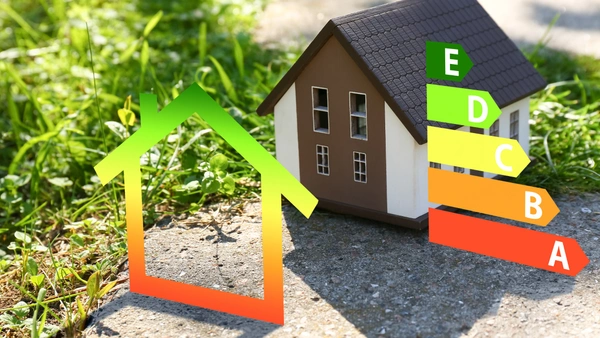
Mandatory condition: work must be carried out by an RGE certified contractor providing an RGE certificate and compliant invoices. Eligibility depends on energy performance improvement measured by DPE class gains. MaPrimeRénov’ 2026 caps vary depending on the operation and income.
Procedure: submit your application on maprimerenov.gouv.fr before accepting the quote. Attach the RGE quote and income documents. After completion, submit invoices to receive the grant.
Replacement of windows and joinery: eligibility conditions
Window replacement may qualify for a grant if the joinery meets the required performance level with a Uw coefficient of 1.3 W per m².K or less. Installation must be carried out by an RGE contractor.
Before signing, verify the Uw value on the quote, the RGE mention, and that the invoice specifies vat. Some local aids may complement MaPrimeRénov’. Simple replacement is not automatically deductible.
Schemes and aids for works in 2026: MaPrimeRénov’, tax credit, and reduced vat
The aid landscape in 2026 combines several tools: MaPrimeRénov’ or its evolution, targeted tax credits for adaptation, and reduced vat rates. ANAH and France Rénov’ manage a large part of these aids. The ministry publishes conditions on economie.gouv.fr.
Rule to know: it is prohibited to combine several aids for the same work item. You may combine aids for different items. Keep all documents to prove non duplication in case of audit.
Summary comparison: MaPrimeRénov’ is a flat grant depending on income and energy gain. Adaptation tax credit is a refundable benefit for accessibility works. Reduced vat is an immediate reduction on the professional invoice.
MaPrimeRénov’ in 2026: conditions, caps, and procedures
MaPrimeRénov’ targets energy improvement of the main residence. Amounts depend on income conditions and the type of operation single action or comprehensive renovation. Caps per household and per operation evolve; check official values before signing.
Usual documents: signed quote with an RGE contractor, application submitted before works on maprimerenov.gouv.fr, income documents, and RGE invoices after works.
Reduced vat rate for works: which operations are concerned?
The 5.5% super reduced vat applies to energy renovation works and certain performance related operations. The 10% vat applies to improvement, fitting, and maintenance works for homes older than two years.
Only the portion invoiced by the professional qualifies if the homeowner purchases materials directly. Request an invoice specifying vat and use traceable payment methods to secure your file.
Eligibility conditions and caps to benefit from tax advantages in 2026
Common conditions: main residence, minimum property age more than two years for certain schemes, use of an RGE contractor for energy works, and keeping invoices for at least three years.
Indicative example of cap: the adaptation tax credit is 25% of expenses, with commonly cited caps of €5,000 for a single person and €10,000 for a couple over five years. Verify official texts before committing.
MaPrimeRénov’ 2026 spending caps vary depending on the operation and income category. An incomplete file or cash payments may lead to tax reassessment risk. These risks remain manageable with proper preparation.
Income conditions and categorization
The 2026 reference tax income is used to classify households and determine eligibility for MaPrimeRénov’. Income categories define household caps and increases per dependent.
Before applying, prepare your tax notice and use the official simulator on maprimerenov.gouv.fr to estimate your aid.
Obligations related to contractors: RGE certification and compliant invoices
To benefit from aids, request the contractor’s RGE certificate and require a complete invoice including company identity, registration number, detailed description of works, breakdown of labor and materials, and vat mention.
Keep all documents for at least three years. Prefer traceable payment methods such as bank transfer and, if necessary, request company registration details.
Special cases: rental property, SCI, condominium, second homes, and heritage schemes
Most national aids target the main residence. For rental investment and asset holding structures, rules differ: land deficit, furnished rental status, Denormandie, Malraux, or Historic Monuments schemes offer specific tax benefits subject to conditions.
For example, an SCI is generally not eligible for MaPrimeRénov’ for its rental properties. Second homes are often excluded from national aids unless local schemes apply.
Rental investment: land deficit and applicable regimes
For unfurnished rental property under the real regime, deductible works may generate a land deficit. The deductible ceiling against overall income is often mentioned at €10,700 per year; verify the official 2026 cap.
For furnished rental status, tax depreciation allows spreading the cost of works and reducing taxable profit. Distinguish maintenance works deductible from extension works not deductible.
Denormandie, Malraux, Historic Monuments, furnished rental: what rules apply to works?
These schemes target investors.
Denormandie requires works representing at least 25% of the total cost to qualify.
The Malraux scheme concerns restoration in protected areas.
The Historic Monuments regime often allows full deduction of restoration expenses.
Furnished rental offers depreciation and specific accounting rules.
These options require specialized tax advice and strict compliance with rental commitments including duration, capped rents, and eligible zones.
Declaring works to the tax authorities in 2026, supporting documents and tax audit
Declaration is mainly done online on impots.gouv.fr. For certain credits and reductions, complete form 2042 RICI. For MaPrimeRénov’, submit your application before works on maprimerenov.gouv.fr.
Schedule: consult the 2026 tax calendar published by the administration. The 60% tax credit advance is paid at the beginning of the year for certain schemes; the summer balance refund follows after processing.
Keep detailed invoices, RGE certificates, proof of payment, accepted quotes, and MaPrimeRénov’ notifications. These documents are required in case of a 2026 tax audit.
Steps for online declaration and 2026 tax calendar
Key steps: log in to your personal account on impots.gouv.fr. Go to reductions and tax credits, enter the nature and amount of expenses, and keep supporting documents. For MaPrimeRénov’, the file must be validated before starting works.
Reminder: declare any aids received. Only the portion not covered by a grant may sometimes be eligible for an additional tax credit.
Documents to keep and key points in case of audit
Essential documents: detailed invoices specifying labor and materials, RGE certificate, traceable proof of payment, accepted quotes, and MaPrimeRénov’ notification. Archive these for at least three years.
Common mistakes: incomplete invoices, cash payments, self performed works not eligible. Scan your documents and name files clearly such as 2026 04 15 invoice RGE insulation pdf.
Best practices and pitfalls to avoid operational checklist
Quick checklist:
- Verify eligibility before signing the quote.
- Simulate aids to estimate remaining cost.
- Request several detailed quotes from an RGE contractor.
- Submit MaPrimeRénov’ application before works if required.
- Check the Uw value for windows.
- Prefer traceable payment methods.
- Keep all invoices for at least three years.
- Do not combine aids for the same work item without verification.
- Consult a local real estate advisor to assess impact on property value.
- Contact a local Optimhome advisor to prioritize your works and secure your procedures.
Worked example: renovation file simulation and tax gain in 2026
Case 1 attic insulation data verified on 01 05 2026. Cost excluding vat €6,000. Estimated MaPrimeRénov’ grant for an intermediate category €2,400 indicative. Reduced vat 5.5% instead of 20% on the service approximate saving equals €900. Approximate total benefit equals €2,400 plus €900 equals €3,300. Net cost for the homeowner approximately €2,700.
Case 2 bathroom adaptation for loss of autonomy. Cost excluding vat €4,000. Adaptation tax credit 25% indicative cap equals €1,000. If tax due is lower, the excess is refunded. These figures are indicative; verify official caps and RGE eligibility before signing.
These simulations highlight the importance of anticipation: request RGE quotes, simulate MaPrimeRénov’, and check the possibility of a tax credit.
Conclusion
A local Optimhome advisor can help you assess the impact of works on the value of your real estate assets.
Most frequently supported works: energy renovation and accessibility adaptation.
Key condition: use of an RGE contractor and keeping supporting documents.
Mechanisms: grants such as MaPrimeRénov’, adaptation tax credit, reduced vat 5.5% or 10% depending on the operation.
Points of attention: 2026 spending caps and income conditions.
Special cases: rental property, SCI, Denormandie, Malraux, and Historic Monuments have specific rules.
Secure your file: compliant invoices, RGE certificates, traceable payment method, keep invoices for three years.
Always simulate: use official simulators on impots.gouv.fr and maprimerenov.gouv.fr.
Support: contact a local Optimhome real estate advisor to optimize aids and secure your works. Obtain a reliable and accurate property valuation before and after works.
Faq
What works qualify for a tax credit in 2026?
Short answer: In 2026, common tax credits concern home adaptation for elderly or disabled persons and possibly charging station installation if the scheme is maintained. Energy renovations are mainly supported by grants such as MaPrimeRénov’. Consult impots.gouv.fr and maprimerenov.gouv.fr.
Is window replacement tax deductible in 2026?
Short answer: Window replacement may qualify for a grant if windows meet the required Uw coefficient of 1.3 W per m².K or less and if installation is carried out by an RGE contractor. It is not systematically deductible.
Can painting works be deducted on the main residence in 2026?
Short answer: Routine painting works are not deductible. They may benefit from reduced vat if carried out by a professional as part of an eligible overall project such as energy renovation or adaptation.
How do I declare my works for taxes in 2026?
Short answer: Most procedures are completed online via your personal account on impots.gouv.fr. Certain tax credits are declared on form 2042 RICI. For MaPrimeRénov’, submit your application before works on maprimerenov.gouv.fr. Keep invoices and certificates.
Who can benefit from MaPrimeRénov’ aids in 2026?
Short answer: Owner occupiers or landlords of a main residence completed for a certain period may qualify for MaPrimeRénov’ subject to income conditions. Amounts vary depending on the income category; use the official simulator.
Can MaPrimeRénov’ be combined with the adaptation tax credit?
Short answer: Sometimes yes if the aids concern different work items such as adaptation versus energy renovation. It is prohibited to combine several aids on the same work item; verify case by case and keep supporting documents.
What documents should be kept in case of a tax audit for works in 2026?
Short answer: Keep all detailed invoices, proof of payment, RGE certificates, accepted quotes, and MaPrimeRénov’ notifications. Recommended duration: at least three years.
Data verified on 01 05 2026 check the 2026 finance law and official pages impots.gouv.fr and maprimerenov.gouv.fr before signing a quote. For personalized support and connection with local RGE contractors, contact a local Optimhome advisor.
Author :

Fabrice DOBROWOLSKI - Optimhome Network Development Director
Optimhome offers you personalized support for your real estate project. Benefit from all my advice, based on several years of experience, to ensure the success of your project.