Are you wondering how to become a profitable rental real estate investor, and what first steps you should take? Are you also asking yourself which type of property, which location, and which tax regime you should prioritize to protect your project?
This practical guide explains, step by step, the role of a rental property investor — from property selection to property management. You’ll find rental investment strategies, financing methods, and relevant tax levers for 2026.
Discover practical advice to help you choose between old and new builds, shared rentals (colocation), short-term rentals, or indirect real estate investment (SCPI). Ready to get started? Contact your local real estate advisor for personalized guidance and to secure your project.
Understanding the Basics of Rental Real Estate Investment
Rental real estate investment means buying a property or commercial unit in order to rent it out and collect regular rental income. It often also aims at generating a capital gain upon resale.
The main goals are to build long-term wealth, generate additional rental income, and prepare for retirement.
There are several types of assets: apartments, houses, multi-unit rental buildings, commercial premises, student residences, or senior residences.
Small units are easy to rent. Entire buildings spread risk across multiple tenants. Commercial premises can generate higher rents but often come with longer vacancy periods.
The first indicator investors look at is gross yield. This is calculated as the ratio between annual rent and total purchase price.
Gross yield does not account for expenses, property tax, or loan interest. These reduce the actual result.
Net yield includes expenses, taxes, and management costs. It gives a truer picture of the economic performance.
For advanced investors, the Internal Rate of Return (IRR) measures performance by taking all cash flows into account.
Understanding these indicators is essential to compare opportunities. They are also crucial to convince the bank when applying for a mortgage.
What Are the Different Types of Real Estate Investors?
Investors vary: private individuals, first-time buyers, existing owners seeking diversification, professionals, and institutions.
First-time buyers often aim to build long-term wealth. They accept a longer investment horizon.
Professional investors seek short-term profitability and optimize taxation. They may manage multiple assets at once.
Expatriates or foreign investors sometimes buy to secure wealth in France. They appreciate the market’s relative stability.
Each profile has distinct expectations: positive cash flow, tax optimization, or long-term asset appreciation.
Calculating Rental Yield: Profitability and Performance of Your Buy-to-Let Investment
Gross rental yield is calculated by dividing annual rent (excluding charges) by the total purchase price, then multiplying by 100.
Net rental yield subtracts co-ownership fees, property tax, management fees, and landlord insurance.
After-tax yield takes into account tax savings linked to regimes such as LMNP (furnished rental status), the Denormandie scheme, or the Malraux scheme.
IRR is useful for comparing projects over time. It factors in future positive and negative cash flows, plus the resale.
Watch out for hidden costs: unplanned renovation works, unpaid rent, vacant periods, and tenant placement costs (diagnostics, advertising, agency fees).
Calculate self-financing: rent − expenses − loan payments. This tells you if the investment generates positive cash flow.
These tools make it easier to compare listings and reassure banks when you apply for financing.
Choosing Your Property: Strategies and Winning Criteria
Buying a Rental Property: Where, What, How?
The choice of property is decisive for a successful investment. Location, property type, and condition all influence rental demand.
A good location is close to transportation, shops, schools, and — depending on your target — universities or employment hubs.
Study the local real estate market: purchase price levels, achievable rents, vacancy rate, and upcoming urban projects.
Three main asset families stand out: new-build, older property to renovate, and indirect real estate (SCPI).
New-build brings strong energy performance, a 10-year structural warranty, and reduced notary fees. It appeals to tenants seeking modern comfort.
Older property is often cheaper per square meter. After renovation, it can offer higher yield and allow you to use property tax deductions such as déficit foncier.
SCPI (a type of real estate investment fund) allows you to invest with no direct property management. It offers diversification but can suffer from lower liquidity.
Rental strategy matters too: shared housing (colocation) in student areas, seasonal/short-term rentals in tourist zones, traditional long-term rentals for stability.
An entire rental building spreads operating costs and lets you optimize rent per unit, but it requires more capital and stronger management skills.
Investing in Old vs. New Property: Which Should You Choose?
New-build is attractive because you avoid major works in the short term, and energy performance is high.
It suits cautious investors and can benefit from favorable tax statuses, especially furnished rentals (LMNP).
Older property can be purchased below market price and upgraded through renovation. Renovation can improve energy performance and justify higher rent.
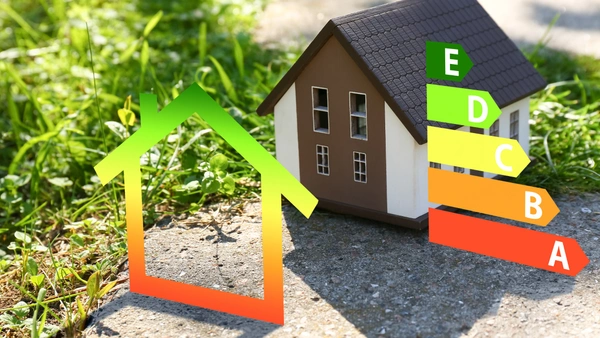
In 2025, the Energy Performance Certificate (DPE) is decisive. Properties rated G are banned from rental. You must therefore anticipate renovation costs.
The choice depends on your objective: rapid yield after renovation (older property) or lighter management and strong energy performance (new-build).
Location and Rental Model: Defining Your Strategy
A strategic location reduces vacancy risk and stabilizes rent levels. Analyze transport links, services, and neighborhood appeal.
For students, stay close to campuses. For young professionals, target areas well connected by public transport.
Shared housing (colocation) can boost yield but requires more active management and careful handling of shared costs.
Furnished rental (LMNP status) allows higher monthly rent and access to depreciation of the property for tax optimization.
Short-term/seasonal rental can deliver higher revenue. However, it demands ongoing marketing, cleaning costs, and frequent tenant turnover.
Adapt your strategy to the property type, local demand, and your ability (or willingness) to manage or delegate day-to-day operations.
Financing Your Rental Investment Project
Financing determines how much you can buy, the leverage effect, and your final profitability.
Banks offer mortgage loans, often made easier with a personal down payment. A strong application improves loan conditions.
In 2025, investing with no down payment is still possible if your file is strong and the property’s rental yield is convincing.
Prepare a full banking file: rental business plan, loan simulations, and proof of income.
Self-financing is ideal: it means rent covers mortgage payments and running expenses.
Compare interest rates, loan term, borrower insurance, and arrangement fees. Negotiate to reduce total cost.
To finance energy-efficiency improvements, an eco-PTZ (zero-interest eco-loan) can sometimes complement the main mortgage, subject to conditions.
Finally, legal structures such as an SCI (property-holding company) can optimize inheritance planning and taxation depending on your long-term goals.
Investing with No Down Payment: Is It Possible for a Buy-to-Let?
Yes, investing with no down payment is possible. It depends on the strength of your file and the bank’s policy.
To convince the lender, present a solid financing plan and a realistic rent estimate.
Anticipate risks. Vacancy periods or unexpected repairs can put pressure on your cash flow.
Build in a safety buffer and a fallback plan to absorb surprises.
Property Tax Optimization: Reducing Tax to Maximize Net Yield
Taxation has a major impact on profitability. In 2025, the Denormandie scheme, the Malraux law, and LMNP status remain powerful levers.
The “régime réel” (actual-cost tax regime) allows you to deduct expenses, loan interest, and renovation work. Under certain conditions, it can generate a deductible property deficit (déficit foncier).
Under LMNP (non-professional furnished rental), depreciation of the property lowers the taxable base. This can make the investment highly tax-efficient.
Run tax simulations and seek expert advice to choose the regime best suited to your situation.
Managing Your Rental Property: Best Practices and Key Advice
Property management determines the stability of your income and the long-term viability of the project. Strong management reduces the risk of unpaid rent.
Polish your listing: high-quality photos, clear description, and up-to-date diagnostics attract serious applicants.
Tenant selection is crucial: verify income, guarantees, and request a complete application.
Draft a clear lease agreement specifying the rental type, the security deposit, and allocation of utilities/charges.
Respect your legal obligations: technical diagnostics, electrical and gas safety compliance, minimum habitability standards, and decency requirements.
To limit vacancy, set a rent that matches the local market and keep the property in good condition.
Delegated property management can secure the landlord-tenant relationship. It has a cost, but it frees you from day-to-day operations.
How Do You Choose the Right Tenants?
Check payslips, tax returns, and references. Ask for a full application before signing.
Favor tenant profiles where rent represents roughly 30–35% of net income.
Guarantees such as a joint guarantor or unpaid rent insurance (GLI) strengthen your security.
Short-Term Rental vs. Long-Term Rental: Pros and Cons
Short-term/seasonal rental can bring in higher gross income. However, it requires ongoing marketing, frequent turnovers, and additional service costs (cleaning, key handover, etc.).
Long-term rental offers stable income and simpler administration.
Choose based on location, property profile, and your capacity to manage — or outsource — the workload.
Avoiding Pitfalls and Optimizing the Profitability of Your First Rental Investment
There are several common pitfalls: overpaying for a property, underestimating renovation costs, or neglecting tax implications.
Do not rely solely on gross yield. Calculate total cost: expenses, taxes, works, and insurance.
Diversify your property portfolio to reduce vacancy risk.
Targeted improvements such as insulation or kitchen upgrades often increase rent and attractiveness.
Continuously adapt your strategy to changes in the local real estate market and tax environment.
Finally, plan ahead for resale by keeping full records of renovation work and maintaining the property in good condition.
Legal Obligations for the Investor and Landlord
The landlord must provide mandatory property diagnostics: Energy Performance Certificate (DPE), asbestos, lead, and, depending on the building’s age, electrical and gas reports.
You must comply with minimum decency and ensure the safety of installations.
Security deposit rules, lease duration, and allocation of service charges must follow applicable regulations.
Be aware of local rent caps or rent control rules to avoid disputes.
Optimizing Your Portfolio and Long-Term Profitability
Diversification across regions and asset types is effective: combine large metropolitan areas and strong mid-sized cities to balance security and yield.
An SCI (French property company) can simplify collective ownership and succession planning. Holding property in your own name is administratively simpler.
Plan acquisitions according to your cash flow, your debt ratio, and upcoming tax/regulatory changes.
Your Optimhome Real Estate Advisor: A Key Partner for Successful Rental Investment
Optimhome advisors are local experts. They support investors at every step: research, valuation, transaction security, and rental investment strategy.
They understand the local real estate market and identify properties with strong yield potential.
They can also offer rental management services to screen reliable tenants and reduce vacancy.
Contact an Optimhome advisor for a tailored analysis and hands-on support toward a profitable investment.
Conclusion
Knowing the market and accurately calculating profitability (gross, net, net after tax) is essential for a viable project.
Choosing the right property (location, type, condition) drives tenant demand and reduces vacancy.
Optimizing financing (loan simulations, banking file, eco-PTZ) improves leverage.
Actively managing the asset (tenant selection, maintenance, presentation) limits risk and boosts value.
Anticipating taxes and using the right schemes (LMNP, Denormandie, déficit foncier) maximizes yield.
Diversifying your portfolio and using the right ownership structure (SCI) protects long-term wealth.
To secure and succeed with your project, contact an advisor from the Optimhome network: tailored support for acquisition, sale, rental investment, and property management.
FAQ
What are the different types of real estate investors?
Investors can be private individuals (first-time buyers), professionals (property traders), expatriates, or foreign investors — each with different goals.
Is rental real estate investment profitable?
Yes, if you choose a good location, correctly calculate net yield, and control both costs and day-to-day management.
What salary do you need to invest in rental property?
There’s no fixed minimum salary. Banks assess borrowing capacity based on your case, down payment, and projected rental performance.
Who can advise me on rental property investment?
Local advisors in the Optimhome network can help you find profitable assets, secure transactions, and handle property management.
Where should you invest in rental real estate?
Prioritize large metropolitan areas, dynamic mid-sized cities, and tourist zones depending on your strategy: security, yield, or seasonality.
How do you invest in rental real estate?
Define your objectives, choose the asset type and location, run financing simulations, calculate yield, and organize property management.
Should you invest via an SCI or in your own name?
An SCI can simplify management and succession. Holding property in your own name is administratively simpler. The right choice depends on your wealth strategy.
What is the most profitable rental strategy?
Shared housing (colocation) and short-term rentals often deliver the highest yields — but they also demand the most active management.
Author of the Publication

Fabrice DOBROWOLSKI, Network Development Director at Optimhome
“Benefit from my expert advice, based on many years of experience in the real estate sector, to ensure the success of your buying or selling project.”